
Closing a month
A month closes on its own — there’s no button to press. The first time you open your budget after a month has ended, Tavera Money settles it: it works out how much cash the household actually kept for that month and caps what any rollover-enabled category is allowed to carry forward at that real figure. That’s the mechanic covered in more depth in Budgets & rollover — the short version is that one category overspending can’t be quietly absorbed by another category’s unspent balance, but money you rolled forward from an earlier month and left untouched this month is protected and still carries forward regardless.
If you’ve been away for a while, catching up happens gradually across your next few visits rather than all in one expensive pass.
What the recap tells you
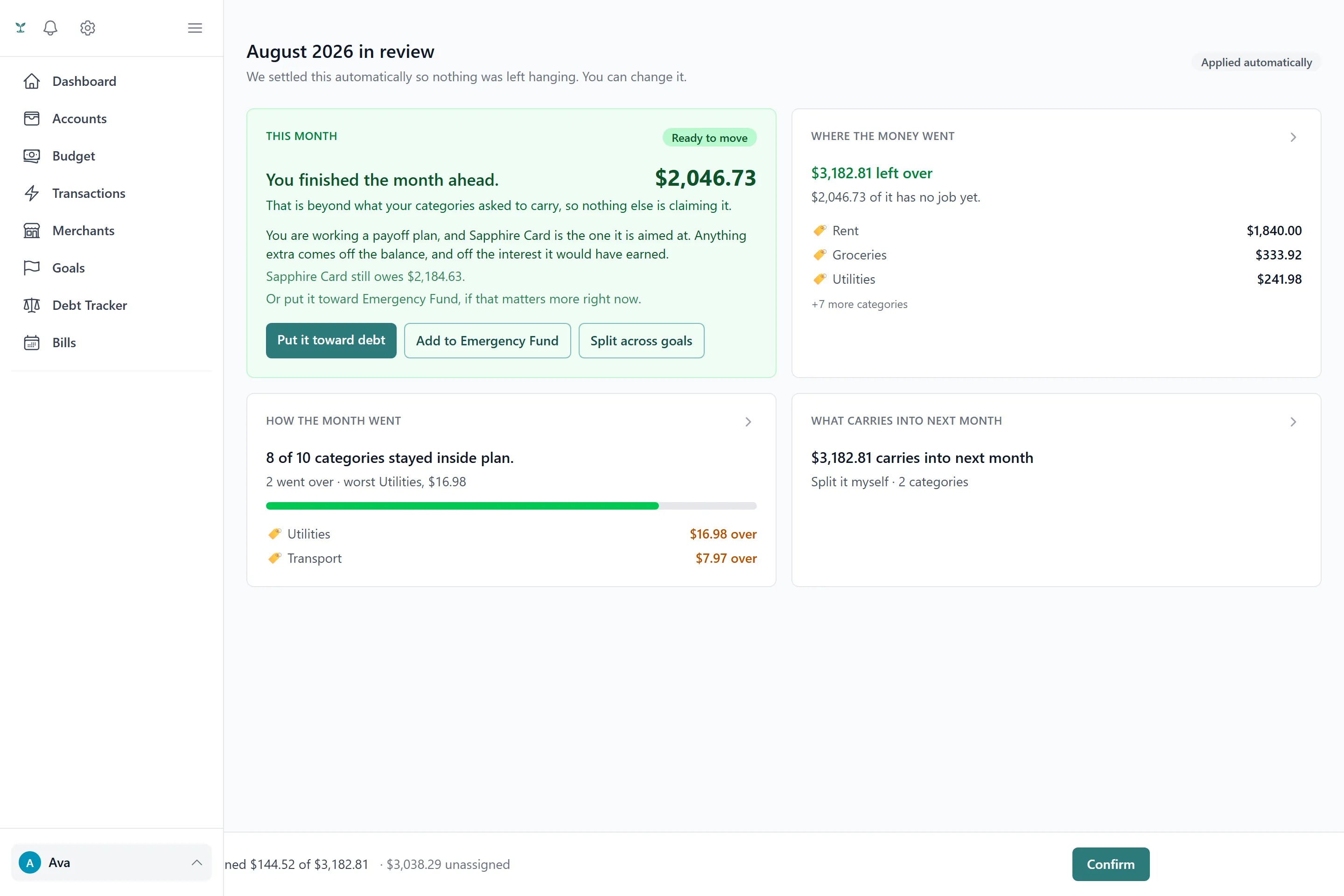
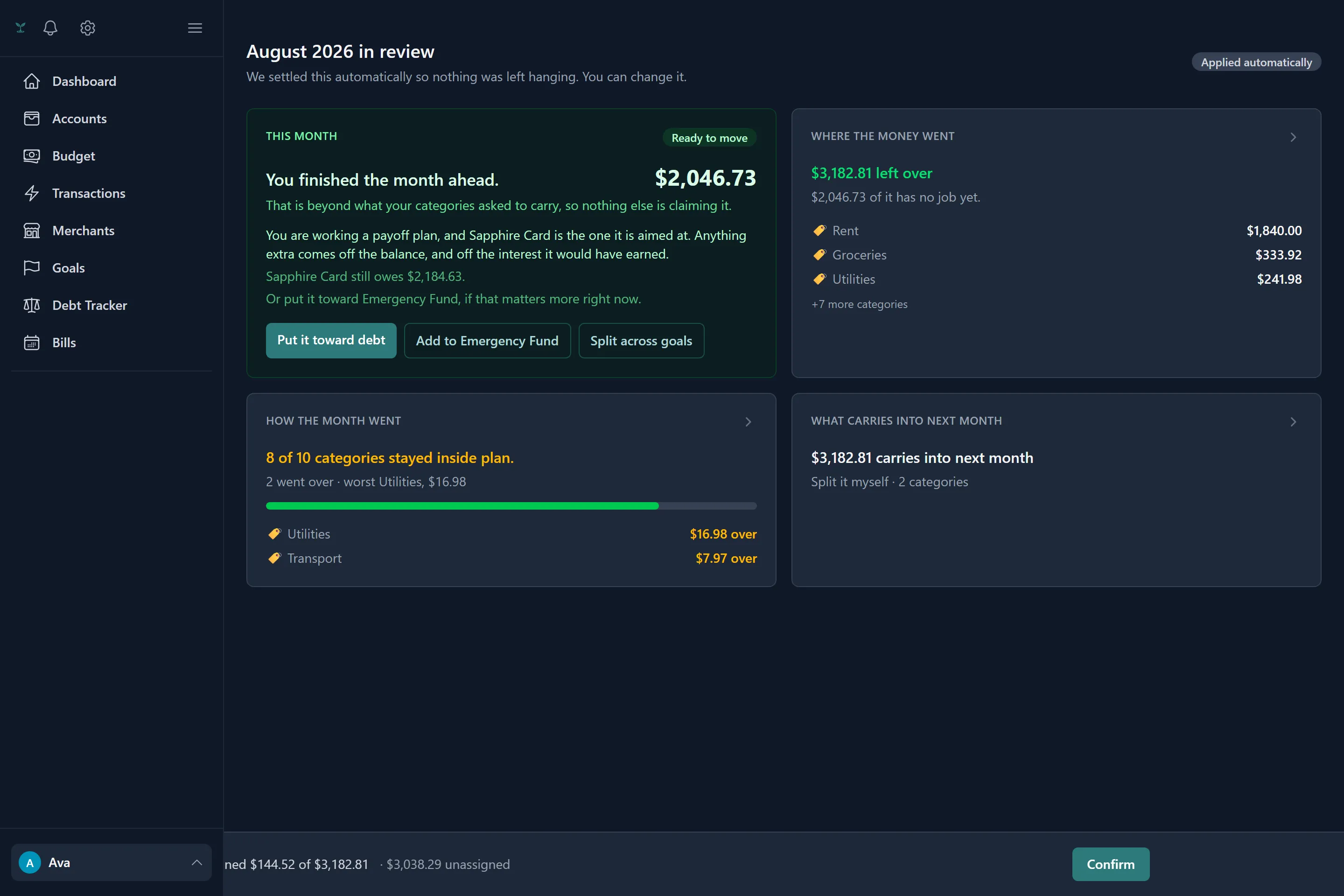
The recap reads the numbers a closed month already produced and turns them into plain sentences — a ranked list of what ran over, a tally and the standout wins on the side that came in under plan. The tone is warm by default: one bad month in an otherwise fine category isn’t treated as a pattern. It firms up, and says so plainly, only when a category has run over in most of the last few months running — because at that point the issue usually isn’t the month, it’s that the plan doesn’t match what the category actually costs, which is worth naming so it can be fixed. Categories you never touched all month are left out of “how many finished inside plan” so a budget doesn’t get credit for two dozen dormant lines that never had a chance to go over.
When a month comes in ahead
A month that keeps more than it needed gets a suggestion for where the extra should go, in this order:
- Toward a debt, if you have one — naming it directly, using whatever payoff strategy you’ve already set. A dollar against a balance earns a guaranteed return every month that debt would otherwise still be accruing interest.
- Toward a goal, naming it and saying outright if the amount would finish it — a goal crossing its finish line is worth acting on the day it happens, not sometime later.
- Nothing pointed anywhere yet? Then the suggestion is simply to give the money a job — a rollover category to build up, or a new goal to start with it.
Small amounts aren’t flagged this way at all — a few dollars of surplus isn’t an opportunity worth interrupting your recap over.
Getting notified
Turn on the Month recap ready alert (see Notifications) to hear about it as soon as it’s waiting, rather than discovering it next time you happen to open the budget.